|
|||||||||||||||||||||||||||||||||||||||||||||||||||||||||||||||||||||||||||||||||||||||||||||||||||||||||||||||||||||||||||||||||||||||||||||||||||||||||||||||||||
|
|||||||||||||||||||||||||||||||||||||||||||||||||||||||||||||||||||||||||||||||||||||||||||||||||||||||||||||||||||||||||||||||||||||||||||||||||||||||||||||||||||
|
CEOCFO Monthly Analyst |
Analyst Industry Review December 2000 Biotechnology & Drugs Diagnostic Devices ANALYST INDUSTRY REVIEW Ms. Mya Wagle - Equity Analyst -
RedChip.com, Inc. Interview conducted by: CEOCFOinterviews.com December 2000 CEOCFOinterviews
- Give a brief career history. Ms. Wagle – “I
cover stocks in the Healthcare arena ranging from diagnostic devices to biotech companies. These are the sectors that I like to cover because
my background is as a trained Biochemist. I
have spent extensive time getting postgraduate work done in that area as well as business school.
I also spent some time with health regulators in state health departments and
insurance companies. I enjoy putting
everything that I’ve learned together in a package as an Equity Analyst at
RedChip.” CEOCFOinterviews - Can you take us
through the steps of what it takes a biotech company to bring a new drug to the market
place? Ms. Wagle – “The
steps that a company has to go through to bring a drug to market is as follows: they must
put it through an INDA or an investigational new drug application. After a few studies on it you then put in for
an NDA, which is a new drug application and in between all of that you have the clinical
trials, Phase I, Phase II and Phase III, with each clinical trial taking a minimum of
about twelve to eighteen months. So if
you’ve got an investigational drug application through the FDA, which normally takes
about four to six months, then you start your studies and your clinical trials, with every
Phase taking eighteen months, five years has just past right there. Once a study is over you have to put all of the
data together and focus on how you will plan the next study, because things may have
cropped up in that study which you will want to address in the next study. So there will be a period of about a four to six
month waiting period before you start the next study, in which you chew on the data and
then plan your next Phase. So that’s the
reason why it takes any biotech company a minimum of five to seven years to get a new drug
out, and most of these companies don’t turn profitable until about the second year
after they’ve started selling the drug.”
CEOCFOinterviews - Why do you like
the healthcare sector and why should an investor be interested in diagnostic devices and
biotech stock? Ms. Wagle – “When
I grew up my father always said that you make money for two reasons. One is to feed your family and the other is for
your basic health, because if you don’t have health you can’t enjoy anything
else that you have. The desire to help people
live longer may also be the reason why we have so many different areas of research, and
scientists tend to do research in areas that are of concern to them. In the twentieth century we’ve seen advances
in antibiotics and now drug resistant bacteria, with scientists trying to get to the drug
resistant bacteria through biotech means. We
also now have major advances in the understanding of the human DNA, with scientists trying
to get at the root of the cause of so many diseases.
So biotech becomes the key to the search for a solution to diseases.” “I
think investors should look at biotech stock because the companies are trying to get at
the root of the matter, but trying to get at the root of the matter is always longer than
going over it superficially. For example,
instead of just putting a band aid on a cut, or simply treating the symptoms, some
companies are researching into genetics to find out which genes could be responsible for
certain diseases. Once they get to a gene
that has gone wrong, they may try to correct the gene or create a compound in such a way
that it counteracts the effect of the malfunctioning gene. To do all of this requires many resources in
money and intellect, and in today’s capitalistic society, scientific research is done
by only a few people. There are more people
in business than there are in scientific research.
Not too many people are willing to put in those long pain staking days at the lab
bench, it’s almost like a labor of love, so they need support in their effort to try
to find the cause for diseases.”
“When it comes to biotech
stock, in terms of the research, clinical studies and getting approval for a new drug,
therapy or device before a company can even bring it to the market place, it is a long
process. I like to think of it, as, instead
of a mother going through a nine-month pregnancy, she has to go through it for nine years. A long term pregnancy and even longer labor
process, but at the end there is always that wonderful baby.” CEOCFOinterviews - What is the
upside and reward like for the investor who is willing to wait through this long process? Ms. Wagle – “The
upside can be unbelievable. Let’s just
take Amgen, Inc. (NASD: AMGN) into account. Amgen
has Epogen ® and Neupogen, and these are factors to help stimulate the production of your
red blood supply. Many times during surgery,
the patient loses blood-causing anemia. Well
there was no real solution to this problem until Amgen came along with a biotech product
that is similar to the one that your body produces and which could be injected into a
patient. Sometimes even a transfusion does
not work as well, because this is a purely genetic product that could save someone. It’s like a flashlight going off
when the product is finally on the market. We
can use it here, we can use it there, and so they generally find out that there are
multiple uses for it, even widening its market. If
the investor wants something worthwhile like a scientist working in the lab, working
towards this greater goal, the investor must be patient.
With biotech companies it’s not only the effort, the brain power and the
monetary resources, but it’s also like Edison said, “success is one percent
inspiration ninety nine percent perspiration”, and I think that statement which was
true at the beginning of the twentieth century, should be applied now at the beginning of
the twenty first century.” CEOCFOinterviews - What should an
investor look for in the management team of a biotech company? Ms. Wagle – “Of
the basic principals of investing, number one is that management has to be focused,
promoting from within and especially with biotech companies, the scientist have to have
creative license. They need an
entrepreneurial CEO who can look at the scientific as well as the business side of things,
because after the scientist has created a product, you need someone to sell it. Therefore, the CEO has to be alert in forming
relationships, especially with the smaller biotech company who will need to liaison with a
large pharmaceutical firm to bring a product to the market.
The CEO has to be
developing those helping hands
along the way and can’t wait
until he or she is at the end of Phase III to try and do this.”
CEOCFOinterviews - Which of the
companies that you follow, do you feel meet those criteria of having a strong management
team and forming those important alliances? Ms. Wagle –
“Targeted Genetics Corp. (NASD: TGEN), in Seattle has done a good job at forming
alliances. Their CEO Ms. Steward Parker has
been a fascinating ambassador, linking up with the big pharmaceutical companies these
days. They have an alliance with Biogen
Inc. (NASD: BGEN), one with Elan Pharmaceuticals (Elan Corporation, plc, NYSE: ELN) and
yesterday I received an email saying that they now have an alliance with American Home
Products. These are fabulous large companies,
who know how to sell, who know how to market to their target audience and they have a
sales force in place. This is what was
necessary for a small company like Targeted Genetics, which does not have any sales force. Targeted Genetics now has a product in Phase III
clinical trials, and along with Corixa Corporation (NASD: CRXA) were spin-offs of Immunex
Corporation (NASD: IMNX), also based in Seattle.” “Another company that I cover
called NeoRx Corporation (NASD: NERX), had problem with one of their products during a
Phase II trial and their stock dropped when the FDA stopped the study, but I believe they
will recover because of their management team. They
have a very sharp CEO, Paul G. Abrams. He is
an MD himself and a JD, so we have to realize that he knows the medical and the legal
implications. He’s a brilliant man who
is also very good at business, so he’s been able to nurture this company for the last
eight years. He’s facing a tough battle
to get this company up and going, but knowing him I’m sure he’s going to see
what went wrong and where.” CEOCFOinterviews - What other basic
principals of investing should be looked at when considering a biotech or diagnostic
device company? Ms. Wagle – “Of
the basic principals number one is management, number two is product, number three is
ensuring that they have the proper mechanism in place to nurture the product, and number
four would be numbers, such as earnings and sales, but to get those earnings and sales
they must have the proper mechanism.” CEOCFOinterviews - What aspects do
you consider when you look at a companies technology or product? Ms. Wagle – “One
of the important things that I look for when I decide to cover a company is the
technology. Where does the product fit? Will it add, will it be synergistic or will it be
just an addendum? I have a diagnostic company
that I follow, it’s not a biotech company, it’s called Cardio Dynamics (Symbol:
CDIC). I love that company, and I give them a
Strong Buy. Would you want a catheter
passed up through your groin for an angiogram or would you prefer four sensors placed on
your chest, and your heart condition monitored. I
would rather the sensors, and Cardio Dynamics. This
wonderful little machine has four sensors, two for the neck and two for the chest. You can get all of the heart parameters that allow
you to figure out what is wrong with the patients heart, using a noninvasive technology. GE is selling their product on the market.” “There’s another company called Imatron Inc. (NASD: IMAT) which I give a buy to, who used to have alliances with Seamans. For a couple of years they were almost treated like the pariah. Seamans dictated all of the terms and said they were going are going to sell your instrument this way and their marketing strategy was wrong. When Imatron distanced itself from Seamans it faced a tremendous uphill battle. In October, Opera had a show in which she had a complete heart condition diagnosis on the Imatron scanner. They have gotten about sixteen hundred calls per day now since that show, because there scanner is almost fifteen times faster than the GE scanner. What it does is it takes a picture of your heart and arteries in 3D slices, and it comes up with a calcium count. You might have a normal cholesterol and lipid level, but there might still be plaque in your arteries. The plaque deposition happens in conjugation with the lipids and the amount of calcium in your system. Therefore, Imatron came up with what is called the calcium score that indicates whether you have heart disease, or whether you have a predisposition towards heart disease. It’s almost a prognostic instrument. If you have a high calcium score, then you can change your life style so that you don’t develop a plaque deposition. They are now selling it by themselves, and they are doing a great job. They are turning profitable. They’ve just started marketing it themselves within the last year and a half. They have a fabulous World Wide sales VP, Jack Marquess, and President, Terry Ross who has invested about three million dollars of his own money into the company. They’ve been selling almost seven or eight instruments per quarter, and these instruments cost about two million dollars a piece. People don’t buy these instruments on a shopping spree, but they’ve been able to sell them and they are making money. Both Cardio Dynamics and Imatron have fabulous management. To me management is number one. Cardio Dynamics has dynamic management. They have the best thing for getting regulatory approval. I would say that they have the best mechanism for a small company that I’ve ever seen.” CEOCFOinterviews - Of the companies
that you cover, which are situated the best with their cash and credit. Ms. Wagle –
“Targeted Genetics has set up all of these alliances with these large pharmaceutical
firms who have very deep pockets. A Phase I
trial cannot only last about twelve to eighteen months but it can also cost anywhere from
one million to three million dollars. Therefore,
a biotech company needs a strong force of cash, to finance all of this Phase I, Phase II
and Phase III trials, all of these studies at these different hospitals, which expect to
be paid. For the small biotech companies
such as Abbott Laboratories (NYSE: ABT), Merk & Co, Inc. (NYSE: MRK), or Pfizer Inc.
(NYSE: PFE) , American Home Products (NYSE: AHP) can provide that. So, the alliances that Targeted Genetics has
made will prove to be very profitable in that they will be paid in mile stone payments. Many times there is an up front payment, a mile
stone payment, and then royalties and licenses along the way. What has happened with these large companies is
that they’ve gotten to the point where they have all of these successful drugs, and
other drugs in their R&D pipeline, but many of them don’t have the biotechnology
know how, in house. So the large companies
are giving out a helping hand to the smaller companies who are more entrepreneurial and
coming up with the new drugs, but need the money. The
large companies provide the money in an agreement, which allows them to license and market
the new technology. In a way, it proves to be
profitable for both and many times, if the small company is smart they will form these
alliances, because to get to the size of a Pfizer and a Merk, didn’t come within a
few years. They also have fabulous
distribution systems in place, to which the smaller companies don’t have any access. It would be easier for an Abbott or a Merk to sell
their liaison’s drug to a hospital or doctor because they generally will only have
ten minutes to make the sale and the doctor will most likely listen to the larger company
with the proven track record.” CEOCFOinterviews - Can you tell us
about ABAXIS, which is another diagnostic device company that you cover? Ms. Wagle –
“ABAXIS, (Nasdaq: ABAX) under Clint Severson and Don Parker have had the shrewd
management to guide them into the vet arena. They
have this little instrument, and they realized that they could get these little
instruments into the vet market without the chloride test.
They went in, capitalized and have done a fabulous job.” “There is plenty of room for
ABAXIS to grow in the Vet arena, and continue to build value. To get more instruments in there, with the passage
of time ABAXIS may have to make their prices more competitive, both for their instruments
and for their discs. Currently people are
buying their VetScan, a point-of-care blood analyzer because ABAXIS has made a name for
them, but as with any industry, there comes competition and the lowering of prices. They really have the advantage of gaining more
market share because of the quality of the product and the Vets like it. They have quite a few sales people of their own
along with distribution partners in Europe.” CEOCFOinterviews - What are your
recommendations for the companies that you cover? Ms. Wagle –
“ABAXIS is in the category of a Strong Buy because of the way that
they’ve garnered market share and increased production capacity. They are also establishing a customer service and
a technical service, which is very crucial when a company gets to the size that ABAXIS is.
Customers want the feeling of reassurance that there is someone, whom they can call; in
the case, that something goes wrong. Along
with the VetScan the customer must also purchase consumable rotors in order to analyze the
blood. Right now, they are in their new
production facility, which will allow them to meet customer demand for those rotors. That should do well for them in the Vet market. Their success in the human market depends on an
alliance with a big house and if they can add the chloride test which is necessary for
that market and have it approved”. “Targeted Genetics would be a Strong
Buy right now with all of their alliances. Their
products are in Phase II and Phase III trials, and they are making the right connections
at the proper time. They also have a good
R&D department headed by a strong Vice President, Barrie J. Carter, and Ph.D. You need all of these mechanisms in place before
you can go anywhere. For biotech investors,
it’s a long waiting process. Do not
expect any earning, do not expect any dividends, but the companies valuations generally go
up at the end of the Phase II and throughout the Phase III trials, and the stock can go up
tremendously.” CEOCFOinterviews - Are there any
other companies which you may have a buy or strong buy on? Ms. Wagle – “I
would like to tell you about IMPATH Inc. (NASD: IMPH). What IMPATH has done is that there are many
cancers, which are hard to diagnose in a small hospital or academic institution. With
cancer one of the important things is getting to the root.
To treat a cancer you have to know where the primary site of the cancer is. Many
times when you find a cancer it has started to metastasize. About fifteen percent of cancers in general are
what you would call tumors
of unknown origin. IMPATH is company, which
is made up of a group of pathologists and oncologist.
If you go into a small county hospital the oncologist or the family practice
physician, after sending the sample to their lab, still doesn’t know what the primary
origin of the tumor is, they can send the sample to IMPATH via FedEx. IMPATH with it’s team of pathologists and
oncologist gives it’s diagnostic and prognostic information on the cancer and gets
back to the physician in approximately about forty eight hours. With a tumor, the more aggressive the tumor is the
greater the chance that it will recur. The
slower growing tumors have a lesser risk of recurring.
In general, the maximum amount of money spent is when a tumor continues to recur. Therefore, the best thing would be to stop the
tumor at the very beginning and IMPATH with their service in diagnostics is a fast turn
around time. This fast turnaround time gives
these physicians the options of going ahead with an aggressive treatment for the tumor. Up front the treatment may be more expensive, but
if you can stop it from recurring, you will lower the long term cost, which could be
greater.” “IMPATH has that service and
they also have a huge database. It has linked
up with a large number of hospitals and has a whole database of diagnostic and prognostic
profiles, treatment and outcome data. So if
you want to look at certain outcome data, they can provide that information and hospitals
can license this software. The third arena
that they are in is because of all of the names that they have. IMPATH gets six hundred samples a day for testing. Therefore, their database is up to about six
hundred and fifty thousand cancer profiles in their database. Only five percent of cancer patients in the U.S.
are in that kind of clinical trial. What
IMPATH does is work with the biopharma companies, and helps them get the right patient
profiles into their clinical trials. Therefore,
it performs a service that is extremely unique. Because
of all of the profiles in it’s database it can for example, go to a Genentech, Inc.
(NYSE: DNA), and if they are doing a new study on breast cancer, IMPATH can offer the
names of ten women with the profiles that they are looking for. I think that is how IMPATH is building up their
business niche. It not only provides the
diagnostics and prognostic lab services, it also has a database of information and
it’s capitalizing on its database of information by providing it to the genomic
companies.” CEOCFOinterviews - And what is you
recommendation on them? Ms. Wagle –
“It’s a buy right now because their stock has been on a tear. It’s gone up eight to eighty in the last
eight months.” CEOCFOinterviews - What thought
would you like to leave the investment community? Ms. Wagle – “If investors buy a biotech or diagnostic device company at the end of Phase I trials, when you know the product is going to work, and they have the patients to wait for another six to seven years, it usually will pay off.” Technology
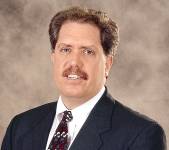
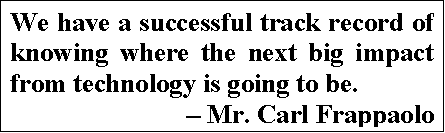
Technology Delphi Group Ten Post Office Square Carl Frappaolo Interview conducted by: CEOCFOinteriviews.com January 2001
|
||||||||||||||||||||||||||||||||||||||||||||||||||||||||||||||||||||||||||||||||||||||||||||||||||||||||||||||||||||||||||||||||||||||||||||||||||||||||||||||||||



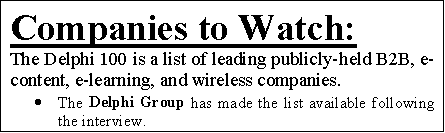
Accrue
Software |
ACRU |
Aether
Systems |
AETH |
Allaire |
ALLR |
Ariba |
ARBA |
Art
Technology Group |
ARTG |
Autonomy |
AUTN |
avantGO |
AVGO |
Blue
Martini |
BLUE |
Broadvision |
BVSN |
BackWeb |
BWEB |
Certicom |
CERT |
CacheFlow |
CFLO |
Calibur
|
CLBR |
Click2Learn |
CLKS |
Clarus |
CLRS |
Commerce
One |
CMRC |
Concur |
CNQR |
Centra |
CNTR |
Cognizant
Technology Solutions |
CTSH |
Citrix |
CTXS |
Docent |
DCNT |
Documentum |
DCTM |
Datalink.net |
DLK |
DigitalThink |
DTHK |
e-Business
Technologies |
EBTI |
eGain
Communications |
EGAN |
Elcom |
ELCO |
E.piphany |
EPNY |
Eprise |
EPRS |
Exchange
Applications |
EXAP |
Extensity |
EXTN |
FileNET |
FILE |
Freemarkets |
FMKT |
JetForm |
FORM |
Mentergy |
GICOF |
GoAmerica |
GOAM |
Geoworks |
GWRX |
Hungry
Minds |
HMIN |
HNC |
HNCS |
Hummingbird |
HUMC |
i3
Mobile |
IIIM |
iManage |
IMAN |
Informatica |
INFA |
Inktomi |
INKT |
IntraNet
Solutions |
INRS |
Infospace |
INSP |
i2
Technologies |
ITWO |
Interwoven |
IWOV |
Kana
Communications |
KANA |
Logility |
LGTY |
Metricom |
MCOM |
Mercury
Interactive |
MERQ |
Marimba |
MRBA |
Merant |
MRNT |
Net
Perceptions |
NETP |
Niku |
NIKU |
Net
Genesis |
NTGX |
Open
Market |
OMKT |
OmniSky |
OMNY |
Optika
Imaging Systems |
OPTK |
Openwave |
OPWV |
Open
Text |
OTEX |
Primus |
PKSI |
Provant |
POVT |
Purchase
Pro |
PPRO |
Persistence
Software |
PRSW |
Remedy |
RMDY |
Saba |
SABA |
SkillSoft |
SKIL |
SmartForce |
SMTF |
SilverStream |
SSSW |
ServiceWare |
SVCW |
724
Solutions |
SVNX |
Versata |
VATA |
VerticalNet |
VERT |
Vignette |
VIGN |
Vitria |
VITR |
Verity |
VRTY |
WebMethods |
WEBM |
WebTrends |
WEBT |
Extended
Systems |
XTND |
February 2001
Services
The Kriegsman Group - A
full service investment and merchant bank
that starts companies with their own capital
The
Kriegsman Group
11726 San Vicente Blvd., Suite 650
Los Angeles, California 90049
Phone: (310) 826-5449
Fax: (310) 826-5529
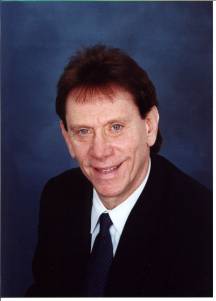
Steven A. Kriegsman
Analyst
Interview conducted by:
Walter Banks, Co-Publisher
CEOCFOinterviews.com
February 2001
CEOCFOinterviews - Mr.
Kriegsman, can you tell us about the Kriegsman Group?
"We take a very analytical
approach in looking at individual companies and studying the industry, but we are
basically interested in undervalued firms. Our
specialty is finding companies with stock prices under $10-15. We do merger and acquisition work; we arrange
strategic alliances; we assist both public and private companies with raising equity and
debt; we write research reports and help those companies in increasing shareholder value. Additionally, we manage money, act as advisors to
several fund groups and represent wealthy families interested in investing in the health
care sector. We have a number of excellent
professionals in the company, including managing directors and analysts, many with very
substantial educational backgrounds at some of the finest universities. One of our key people is an M.D., M.B.A., Ph.D.
out of Wharton and UCLA. We are able to
attract very talented people."
"In addition to being a full
service investment and merchant bank, we start companies with our own capital and move
them along to an IPO or a private placement. We
recently invested and started a genomics company, which we think will become one of the
most successful in the world. We put in a
total of $2 million, brought in a President, Chief Financial Officer, Chief Technology
Officer, a blue chip Board of Directors, including a Nobel Laureate in Medicine, Dr. Louis
Ignarro from UCLA. The Vice Chairman of our
Scientific Advisory board is Dr. Michael Hayden, one of the world’s leading genomics
experts. We think we will capture a
tremendous amount of market share in the genomics field, which right now, is a very
important field in biotech”.
CEOCFOinterviews - Will this be a public company?
Mr.Kriegsman: "Yes, we plan to go public shortly, either by merging into a
public company or raising more money and doing it the conventional way. The name of the
company is Global Genomics Capital, Inc. and I serve as the Chairman of the Board. The
full Board of Directors, Board of Advisors, management team, and all the principals have
made investments in the company. We have already bought 40% of a company in Minneapolis,
which has a very unique technology in the DNA area. The company’s name is Blizzard
Genomics, very apropos for Minneapolis since the weather is so bad there. We intend to purchase additional companies in the
near future. We have been working on that project for about two years, and although it is
still early in the game, we will become a leading force in genomics."
CEOCFOinterviews – Please tell us about some of the companies that you cover?
Mr.Kriegsman: "We have looked at the 2001 market and are very hot on
certain dramatically undervalued companies. One of them is HEARx (AMEX: EAR),
and their stock is now at about $2. It is the third leading provider of hearing care in
the USA with about 80 retail centers located in three regions representing a
$600 million market. Through a carefully executed strategy, the company has developed a
reputation for providing quality hearing care in its own hearing care centers and it has
become a dominant provider of hearing care in the regions that it services. We
think HEARx could be at least an $8 stock within a year."
"Another company we like very much is Supergen, (NASDAQ: SUPG), founded by Dr.
Joe Rubinfeld, who was also one of the founders of Amgen. Supergen has completed Phase III
trials for a pancreatic cancer treatment. If you have pancreatic cancer, there is a 99%
chance that you will die within 4-6 months. It is a terrible and fatal disease.
Supergen has a compound called Rubitecan, which we hope will be approved by the FDA,
that extends the life of patients with pancreatic cancer. The company is also in Phase III
trials for treatments of other forms of cancer. Supergen could be a $50-100 stock in the
next 12 months."
"Miravant Medical Technologies
(NASDAQ: MRVT) is also currently very undervalued. Their stock has come down from about
$30 to only $8. This company has probably the
best technology in the world to treat age related macular degeneration. We expect
their product to reach the market next year and it could be the leading product in the
world."
"Then there is Cytomedix (OTC
BB:CYDX). They have a patented technology for wound closure. If you have diabetic ulcers
and face amputation, their product will let you avoid drastic surgery. I think this
company is very undervalued at about $3. They need to raise additional capital and
have been successful in doing so in the past. They have agood management team and I
think their stock will rebound tremendously."
"Also, there is Siga Technologies, (NASDAQ: SIGA) a leading company in vaccines. They are a very interesting, early stage company with very good technologies and undervalued at $3."
CEOCFOinterviews – What is your thoughts on the management
team of
HEARx?
Mr.Kriegsman: "Dr. Paul Brown is the principal executive at HEARx. He was
Chairman and Chief Executive Officer of Metpatch, which was sold to Corning Glass for $140
million in l982. He is a graduate of Harvard, with an M.D. from Tufts.
Paul is a brilliant executive, and he and his management team can build HEARx into a
major company. We think that ultimately HEARx will either make a substantial number of
acquisitions or will be
acquired at a very significant price. And, we think that its stock is one of the most
undervalued in America right now."
CEOCFOinterviews - How does HEARx market their
product?
Mr.Kriegsman: "They are basically doing retail hearing care in their centers.
There are 33 of them in Florida, 13 in New York, 15 in New Jersey and 19 in Southern
California. Their headquarters are in West Palm Beach, Florida. They cater to patients whose health insurance and
managed care organizations have contracted with them for such care, and to retail
self-paying patients."
CEOCFOinterviews - What does HEARx have to do to grow?
Mr.Kriegsman: "I think they will make some key acquisitions, some strategic
alliances, and open more centers. They know how to manage their centers and their
revenue base is growing dramatically. This year it could grow 40% . We project that they
are going to be very profitable in the year 2002 doing about $87 million in revenue and
earning about $5 million in after tax profits. The stock is now worth about $20, yet it is
selling for about $2. A company growing that fast could be worth at least $250 million,
yet it is only worth $20 million now."
CEOCFOinterviews – What is the outlook for
the medical e-commerce
trends?
Mr.Kriegsman: "The e-commerce market has been devastated, all the stocks have
gone down almost next to nothing and many companies have faced bankruptcy. I think the
problem with the e-commerce marketplace is shareholders that bought stock, did not
actually understand how difficult it is going to be to penetrate the medical marketplace.
Doctors are very busy servicing their patients and do not have the time to be on their
PCs, and their staff is not necessarily adept at working with computers. I believe that
there was also a great deal of hype in terms of what could be done in the medical and
health care fields. Many companies jumped on the bandwagon and at the end, it was the
emperor's new clothes. There are no clothes and they are basically naked. Most
of the companies are naked in this field and will be lucky to survive. I am conservative when it comes to e-commerce in
healthcare; I am not sure who is going to make it. A lot of money has been thrown at
WebMD, and they have tremendous problems. Whether they can make it at this point is
debatable. I think it will work for anybody who can dominate the market, who can develop
great products that people want at a good price, and who can get doctors, patients,
hospitals, and health care facilities using their systems and make a profit. However, I
think there will be, and has been, a tremendous shakeout in the field and I am not sure
what or how many, if any, are going to make it in the e-commerce field. Before going into
a deal in e-commerce, I would do an extraordinary amount of
competitive analyses and due diligence. If
through doing this research, we can find the few companies that will survive and succeed,
then we would do very well."
CEOCFOinterviews – What final thought would you like to leave with the
investment community?
Mr.Kriegsman: "We love the health care space, because you can save a lot of
lives and also make a lot of money. I think that working in health care and
investing in health care is about the best place to be. If you invest in a company like
HEARx, which improves the quality of life for many, contributes to community economies,
and is also financially successful, you can be sure that it will be a sound
investment."
March 2001
Healthcare Services
Providing an attractive investment
given it's typically defensive and non-cyclical nature
Gerard Klauer Mattison
& Co.
212-885-4015
adirnagl@gkm.com
Senior Equity Analyst
Interview conducted by:
Walter Banks
CEOCFOinterviews.com
March 2001
Bio of Analyst
Andreas J. Dirnagl is a Senior Vice President and research
analyst at Gerard Klauer Mattison. Before joining the firm in 1998, Mr. Dimagl was a vice
president - investment banking in the Healthcare Group with Deutsche Morgan Grenfell.
Prior to that, he worked in Eurobond underwriting in London with Deutsche Morgan Grenfell
and as a client relationship manager with Deutsche Bank in New York. Mr. Dimagl earned an
MBA from New York University and a BS in Business Administration from Georgetown
University.
Gerard Klauer Mattison (GKM) is
an equity research and investment banking firm, serving the institutional
marketplace. With over 20 senior, published analysts, the GKM Equity Research
department covers more than 200 public companies, with a principal focus on the
technology/telecommunications, media/entertainment, healthcare, energy and consumer
industries. GKM offers its investment banking clients the benefits of its
award-winning research coverage, coupled with the depth of the firm's industry contacts
and knowledge base. GKM has raised over $4.7 billion in public offerings and private
placements, and advised in over $3.0 billion of mergers and acquisitions, bankruptcies and
leveraged buyouts.
Gerard Klauer Mattison Asset
Management, comprising GKM Advisers, Inc., GKM Private Client Services, GKM Venture
Partners, L.P., and Pattern Recognition Fund, L.P., has over $600 million in assets under
management through its hedge funds and traditional money management services.
Founded in 1989, GKM remains privately held. The firm is
headquartered in New York City, with offices in Boston, Chicago, Los Angeles, San
Francisco, and Tel Aviv.
CEOCFOinterviews - Mr. Dirnagl, please
tell us the sectors that you cover?
Mr. Dirnagl: "I
cover the Healthcare Services space for the firm, which includes areas such as the acute
care hospital sector as well as the renal dialysis sector; the assisted living sector and
some selected medical technology."
CEOCFOinterviews –
What trends are driving investors towards these spaces?
Mr. Dirnagl: "There are differing investment and
thesis for the particular areas that we cover. In
general, healthcare services, particularly in the sort of markets that we’ve been
seeing over the past couple of weeks and months are traditionally considered a very
defensive non-cyclical sector. They tend to
be safe havens for investors in times of economic uncertainty, and economic recession,
usually characterized by things such as falling interest rates, and rising inflation
fears. Certainly some of the tech gloom and doom that we’ve been seeing over the past
few months means that investors are shifting their money out of those sectors, and again
are just looking for defensive non-cyclical areas. Unfortunately,
people will continue to get sick, no matter what the economy is like, and that continues
to benefit companies such as hospital companies, and renal dialysis companies. There is also the medical technology side, which
is very similar, in that it is healthcare oriented. Perhaps not as much driven by some of
the negative market sentiment, is the fact that there are many companies out there with
innovative medical technology that have very good growth prospects going forward. This is
based on general Healthcare trends, including things such as the aging of the US
population. The “baby boom”
population is now beginning to hit their 50’s, and it’s traditionally in the
50’s and 60’s, where people tend to require a lot of medical intervention or a
lot of their healthcare needs. In fact, about
80% of a persons lifetime healthcare expenditures will be spent in the last few years of
their lives. Moreover, these few broad trends are driving investors towards these
spaces."
CEOCFOinterviews – Which of the
companies that you cover would you describe as trendsetters.
Mr. Dirnagl: "We
have a couple, one of which is a Hospital Company under coverage called Universal
Health Services (NYSE: UHS), which is one of our favorite picks in that space, and we are
giving them a buy rating. They focus on acute
care hospitals, in what we call “tweener markets”, in which we normally divide
hospital companies into urban/suburban providers or rural providers. Universal Health
focuses on those in-between markets. They are
in places like Las Vegas, Nevada, in McAllen, Texas, and many of the border communities of
Mexico down in Texas. They are also in
places like D.C., and Puerto Rico. Those
areas are characterized as having double the national population growth and a hospital
company whose local facility usually has a dominant, number one position or a strong
number two position. Universal Health Services is also making a number of acquisitions,
which we think will help fuel growth in the future.
On the
other side, a company that we like is CardioDynamics International Corp. (NASD: CDIC). They are a company in the medical technology
field, which we believe have a very innovative and new paradigm for hemodynamic
monitoring, which is the monitoring of certain heart functions. These are heart functions, which can’t be
monitored without an extremely costly and very invasive procedure, which requires a couple
of days hospital stay. Their main product is the “BioZ System”. This is a
machine that performs a test to monitor the six main hemodynamic functions, using just
more than a few sensors and electrodes to the body and can be done in about ten minutes at
a much lower cost than the other option, which requires a lengthy hospital stay."
CEOCFOinterviews – Can you give us an
evaluation of their management team?
Mr. Dirnagl: "I think that the company
has an extremely strong management team., starting with
Michael Perry, their CEO. Mike has been a
successful person in the healthcare field. He
served as VP of operations for a company called Pyxis, which was a healthcare management
information systems company. Prior to that, he was in various manufacturing and finance
positions at Hewlett Packard’s medical products group, so he obviously has a lot of
experience in this industry, particularly in taking what are innovative technologies and
bringing them to the market. Mike is supported by a number of people, including Rhonda
Pederson, who is the President of CardioDynamics. She
has 15 years of experience in the industry, and was President and CEO of a company called
Culture Technology, Inc, which was a private Biotech company. Prior to that, she held a
number of positions, including companies such as American Home Products, in their medical
devices division and General Electric Medical Systems.
Finally, and probably worth mentioning is Dennis Hepp, who is the Chief Technology
Officer of the company. He has almost thirty years of experience in cardio vascular
medicine and the medical device industry. He
was previously with Medtronic, Inc. (NYSE: MDT), which is the industry leader in cardiac
products, and he holds a degree in Electrical Engineering.
Therefore, they have a broad management team that is very experienced in medical
devices and medical technology, and probably most importantly is experienced in bringing
new medical devices and technology into the market."
CEOCFOinterviews – How long have you
been covering CardioDynamics?
Mr. Dirnagl: "I’ve been covering
CardioDynamics a little over a year now."
CEOCFOinterviews – What did you want to
see them accomplish over the past year, and have they met those goals?
Mr. Dirnagl: "They’ve done exactly
what they said they were going to do. The thrust of the company, and I think it is the
most important aspect, which is; when bringing a new medical technology or new medical
device to the field, the key to success from a financial point of view for a company
trying to do that is, physician adoption. That means that the company has to educate the
entire physician community, letting them know that there is a new option out there for the
treatment of various patients, and in the case of CardioDynamics, anything that requires
hemodynamic monitoring. The core of the
companies focus right now is in the congestive heart failure market, so they’ve been
doing a very good job of getting out to such functions as the American Cardiology
conferences, and getting the real thought leaders in the Cardiology field to stand behind
their technology and to support what CardioDynamics is trying to do. They are undertaking a number of clinical studies
in which they are trying to show the efficacy of this product for various types of
patients. I think where the company has done a very good job, is where they continue to
look for ways to expand their potential market. They
currently focus on the congestive heart failure market, but over the past couple of
months, they’ve been expanding that focus to include such things as the hypertension
market, which potentially dwarfs the congestive heart failure market. They’ve
recently announced a joint venture, alignment or agreement with the Heart Lung Associates
of America, to focus on the use of the product with renal dialysis patients, which is
another 300 thousand patient population in the United States.
From a
financial point of view, the company has continued to grow sales at a pretty impressive
rate. Their most recent quarter showed 51%
increase in revenues year over year. There
was quite honestly a bit of a disappointment from an earning point of view back in the 4th
quarter, just a few months ago. We were looking for a loss of 3 cents for the quarter,
whereas the company posted a loss of 18 cents. It
really had a lot to do with the company investing in its future, specifically building up
its sales and marketing in it’s clinical and support areas, looking through their
list of customers. They along with a number of other companies had one customer in
particular that was more of an Internet related play, and therefore decided that the most
prudent thing to do would be to basically write off all of the inventory and accounts
receivable associated with that customer.
Finally, from a positive trend point of view, the company has
what I believe is a very important relationship with GE Medical Systems, who is their
partner in terms of distribution of the “BioZ System”. They have not only
expanded that partnership in terms of its scope, i.e., into such places as Japan, but
they’ve also expanded that partnership in terms of its scale. Most importantly, is an
announcement and a recent introduction of their new product, the "BioZ ICG
Module" which is designed to be used with GE Medical's "SolarT" monitoring
system, and will be a module that will simply plug in to existing monitoring systems in
hospitals, of which GE is the market leader. That, I think has a very large potential from
the point of view, that floor space is basically a very high commodity within a hospital
environment. The ability to be able to simply plug into an existing monitor system as
opposed to having to have yet another box within the hospital environment, particularly in
the ER section, could be very important and would most likely be a good driver of sales
going forward.
CEOCFOinterviews – What would you like
to see CardioDynamics accomplish over the next 6 months to a year
Mr. Dirnagl: "I think the biggest goal
that I would be posting for them is one that they have accepted, and that is, reaching
breakeven status, which we estimate is going to be sometime between the second and third
quarter this year (2001). The company has a
good cash position, and has more than enough cash to see it through to that breakeven, but
that’s obviously an important turning point for an early stage company. Other than that, we want to see them very much
continue what they’ve been doing now. We expect to see the benefits of some of these
investments that they’ve made over the last couple of months, again particularly in
their sales, marketing and clinical support areas, begin to bear fruit in terms of
accelerating sales, not only of the actual product, which is the Bio-Z monitor, but also
with their disposable sensors. It is sort of the old razor blade verses razor financial
model, and the clinical support staff will go along way in terms of driving that
disposable sensor income as well. Finally,
what is important with any early stage company such as CardioDynamics is the continued
investment in research and development as we’ve highlighted before, particularly in
terms of trying to find new areas of applicability for the product."
CEOCFOinterviews –
What is your rating for CardioDynamics?
Mr. Dirnagl: "We rate them a buy.
Overall, what I would want to say about CardioDynamics is that from my point of view, this
is a typical early stage medical device company. It is probably even past early stage at
this point, where the key really is adoption. What we have seen repeatedly within the
Healthcare industry is that adoption is something that probably takes longer than what you
expected it to take, but once it takes off it really becomes an accepted standard, and
becomes broadly used among the industry. There
are many examples of this; in the past a company called Nellcor, which was acquired by
Puritan-Bennett which was in turn acquired by Mallinckrodt, started off very similarly in
terms of their technology, called pulse oximetry, which is the ability to read the
oxygenation of the blood. They had a slow start and then the technology exploded in terms
of its acceptance."
CEOCFOinterviews – Do you see that
happening with CardioDynamics?
Mr. Dirnagl: "I do see that happening
with CardioDynamics. Quite honestly, from an investment point of view, the question is
when does that occur, and that is something that is very difficult to predict with any
clarity. However, with the company positioning itself very well in terms reaching
breakeven status, sometime mid this year, they continue to grow the company slowly until
the point where they really can take off in terms of their acceptance."
CEOCFOinterviews – Is there another
sector that you would like to mention in closing?
Mr. Dirnagl:
"I would like to leave you with yet another sector which we cover, and that
is the renal dialysis sector. A company that
we like in that sector is a company called DeVita Inc. (NYSE: DVA), formally known as
Total Renal Care. They are a renal dialysis provider; they own and operate dialysis
clinics. Dialysis is basically the
substitution of artificial means for patients who have had kidney failure, i.e., it’s
a way to filter the toxins out of the blood. The Dialysis Industry as a whole is a pretty
good and stable business, with a 6 to 9% patient population growth, and very stable in
terms of predictability of revenue and cash flow, from the point of view that patients
have to come to you 3 times a week, or they die. The
company about two years ago at this point, faced a huge disappointment from the point of
view that they made a major acquisition and their administrative and back office functions
collapsed, causing cash flow to go negative and revenues to decline precipitously. A new
management team was put in place at the company with Kent Thirty, as the Chairman and CEO.
He has very good experience in the industry, and he has done an excellent job over the
past 12 months, in turning that company around on an administrative basis, and now he is
taking what we would consider a laser like intensity of his focus from the administrative
side, now that its fixed, and placing it on the operations side. Theirs, is another story
where we think the possibilities are very good, and that turning that company around,
putting it back into an acquisition mode and really focusing on operations could provide a
lot of upside from where we stand now."
CEOCFOinterviews – What is the rating
that you’re giving DeVita Inc.?
Mr. Dirnagl: "We rate them a
“buy” as well."
CEOCFOinterviews –
What final thoughts would you like to leave with investors?
Mr. Dirnagl: "In times of economic and market uncertainty, healthcare provides for an attractive investment given it's typically defensive and non-cyclical nature. Traditional areas such as hospitals and dialysis providers can provide an attractive and highly visible earnings stream, which should provide for good stock appreciation. Finally areas such as medical devices and technology, particularly early-stage companies can provide for dramatic upside as their products gain acceptance and increased usage in their respective fields."
April/May 2001
Technology, Retail
& Healthcare Companies
Internet infrastructure
and network security
First Analysis Security
9500 Sears
Tower
233 S. Wacker Drive
Chicago, IL 60606
Phone: 312.258.1400
Howard Smith
Analyst
Interview conducted by
Walter Banks
CEOCFOinterviews,com
May 2001
Bio of Analyst
Howard
Smith
Howard joined First Analysis in 1994 and, as a senior vice president, coordinates the
firm’s Internet infrastructure investment and research activities. As a private
capital investor focused on growth equity opportunities in the sector, Howard works with
entrepreneurs building cutting-edge Internet-based businesses, and evaluates hundreds of
business plans annually. As a public equity analyst covering Internet infrastructure and
network security companies (such as Exodus Communications and VeriSign), Howard regularly
speaks with the senior management teams of the sector’s leading public companies, and
he has deep knowledge of the sector’s competitive dynamics and market trends. Howard
has also played a key role in several mergers, acquisitions, and public equity
underwritings in the sector (such as the IPO of PKI player Zergo, now Baltimore
Technologies)
Howard’s
understanding of the sector is grounded in his earlier work in the telecom infrastructure
and equipment sector, where he established coverage of several prominent public companies
(such as Comverse Technology). Prior to joining First Analysis, Howard was a senior tax
consultant with Arthur Andersen, where he advised investment partnership clients on
tax-related issues.
Background
University
of Chicago: MBA (finance)
University of Illinois at Urbana-Champaign: B.S., accountancy, Highest and Bronze Tablet
Honors
Certified
Public Accountant (1991 Elijah Watt Sells AICPA award winner
About First Analysis
Founded
in 1981, First Analysis is an integrated, research-driven investment organization serving:
-
emerging
growth companies, with (growth) equity and venture capital investments
-
financial
institutions, with public equity research and
-
corporations,
with corporate finance and M&A advisory services
First
Analysis applies a unique strategy to achieve deep domain expertise in the areas of focus. Its 40 investment professionals average more than
10 years of relevant experience.
Successful
execution of this strategy has yielded results including
-
$500
million in private capital funds invested in over 150 companies since 1985
-
first
–quartile private capital performance supported by over 50 IPOs and major M&A
transactions
-
research
on more than 100 publicly traded companies
CEOCFOinterviews
– Mr. Smith, what is your position at First Analysis Security?
Mr. Smith:
I
coordinate our technology research practice, my area of expertise is network security.
CEOCFOinterviews –
Please tell us about the industry which you cover?
Mr. Smith: The network security industry is a very dynamic industry, and a high growth industry. We’ve been following it here at First Analysis Security since the Internet caused an up-tic in the growth, which happened about 1995. There are several different sectors within this industry. First, there is anti-virus, which has been around since the 1980’s. The other sectors are firewalls, which have been around since the mid 1990’s, virtual private networking equipment, intrusion detection to try and detect when people are coming into a network who shouldn’t be, and strong authentication – that is when you’re logging onto a network or computer, making sure you are who you claim to be. As the world has become more distributed in terms of how it controls data and where that data is placed, and who has access to the data, such as outside partners, vendors, and suppliers, the security issues associated with that data have increased exponentially, so it’s been a phenomenal investment area.
CEOCFOinterviews – What do you see on the horizon for these areas?
Mr. Smith: There will be no shortage of new threats coming about. To date, the incidents which have gotten a great deal of attention have been websites that have been defaced, and it’s more of a PR issue for the companies that have been attacked rather than a real financial loss issue. You are starting to hear of issues of credit cards being taken off servers, and more serious issues just recently with some companies such as Microsoft where a Russian hacker stole source code. Lucent is another example of a company that got some press because one of its R&D projects was stolen by some engineers. I think that you will start to hear more of those types of incidents. Therefore, the real threats as most data has suggested, is with internal employees, actually stealing or manipulating or causing problems with the systems and the real financial losses will start to get more publicity. All of this will just serve to force more attention on the sector. Chief Security Officers will probably be as common as Chief Information Officers in large corporations a couple of years from now.
CEOCFOinterviews – What effect will that have on investors?
Mr. Smith: I think that it will continue to create opportunities. There are a couple of nice things from an investment perspective. First, the numbers and types of threats keep changing, so that there is always a new area of security emerging to address those newer threats. Therefore, it’s not a static area where you have a leader today, and that’s the leader for all time. Secondly, there are two aspects to security. Number one is prevention or protecting assets and the other is opening up new revenue opportunities or new ways to do businesses. People are not going to conduct business online and have a paperless economy that many of the exchanges, such as the B2B exchanges, and the B2C exchanges have been talking about, unless the security issue is solved, and that is a whole different area of security that’s at a newer stage in its life cycle than the asset protection solutions. Another interesting area is wireless security, which is not a whole new sector, but there are some unique wireless security angles such as wireless commerce and wireless data which are really going to take off, and security is going to be right along with it and that will provide an opportunity for investors.
CEOCFOinterviews –
What companies do you like in this sector?
Mr. Smith: We have two strong buys in that sector right now. One of our long-term favorites has been Check Point Technologies (NASD: CHKP), which is an Israeli based company, and they are the leader in the firewall and VPN markets, which are two of the most dynamic markets. The company is well managed, and has one of the highest margins of any publicly traded company. Their net after tax margin has been running over 50% for the last several quarters. We have a strong buy on that stock.
Our other strong buy is a very different type of company, called ValiCert Inc. (NASD: VLCT). This is an emerging opportunity, a very small company with much greater risk, but is in an interesting emerging market, and given it’s market capitalization and the opportunity in front of it, we think that it provides, for a risk tolerant investor, a good opportunity.
CEOCFOinterviews –
What is your evaluation of their management team?
Mr. Smith: I think
their management team has proven to be very adept at changing with the market, and that is
one of the things that we look for and one of the things that we like about the company.
We’ve know this company for quite some time, pre-dating it’s IPO in July of
2000, when the company was really a pure play on certificate validation. A certificate is a little esoteric term in
security. It’s basically an identifier that could be issued to a person, much like a
passport, and once it’s issued it has an expiration date but there is really no
mechanism to find out if, for some reason, it was revoked before its stated expiration, by
the person who issued it. For example, a company might issue certificates to its
employees. Once a person is no longer an
employee of the company and they want the world to know that it has revoked that
credential. However that credential is still
out there, with an expiration date that hasn’t come up yet. Therefore, ValiCert Inc. has some very unique technology for solving that problem
of letting the world know when a certificate is no longer valid, and that is a pure play
on derivatives of digital certificate adoption, which hasn’t been as fast as a lot of
people have thought. So they were very quick to go out and expand their offering and their
value proposition to customers by acquiring some digital receipt technology and some
secure file transfer technology and putting it all together. More recently, with the down
turn of the tech market, what I’ve been impressed with is that they’ve
remarketed or repackaged this technology to target vertical applications. They have a cash
management application, and an insurance claims application, an e-government application
and they are not selling the core technology to the customer. They are selling a way to
bring your business on line and save money, a good ROI sale. Therefore, what I would
highlight about management is their ability to adapt to the economic conditions and
environment that they are facing, and they’ve managed to do it without missing a beat
or missing numbers at any point.
CEOCFOinterviews
– Can you give us a picture of their market?
Mr. Smith: The core
original business of validating certificates is a small market today. It may be less than
10 to 15 million dollars on an annual basis, but as this whole infrastructure builds out
over the next 5 to 10 years it could grow into a multi-billion dollar market, and they are
positioned to be the leader there, which is one of the things that has us excited about
the stock. But there’s a question of how
quickly that happens and how quickly the market expands. If you look at the market more
broadly, as the market for providing solutions to move processes online, that is a much
bigger market today.
CEOCFOinterviews – What would you like to see them accomplish over the next year to reach that next level?
Mr. Smith: The key for ValiCert Inc. is to reach cash flow positive. This was one of the last
companies that came out under the Internet model of IPOs and public offerings, where the
company could still be burning a lot of cash and not have that much revenue. They are
currently burning about 8 million dollars a quarter of cash, and the management believes
and we do as well, as long as they hit their plans, that they have enough cash in the bank
to take them to profitability without accessing the capital markets. However, clearly,
that is the issue on investors minds, and that is what they have to execute and prove the
next year. We would expect them to be profitable at the very end of 2002. What I think
also highlights some of the quality of their management, is their recognizing the economic
environment that we’re in today. They took the proactive step of reducing their
expenses through a head count reduction of about 10%, to help enable them to meet that
profitability objective.
CEOCFOinterviews –
Are there any other companies that you would like to highlight?
Mr. Smith: There are two other companies that I would highlight as being long-term leaders in the space. One is VeriSign, Inc. (NASD: VRSN), a large cap company which is very well managed, and the other would be RSA Security Inc. (NASD: RSAS), which is in the strong authentication space, and it has some pretty core technology in encryption as well as their main business, which is the authentication. They are also a player in the emerging area of digital certificates. Therefore, it has been one of the longer term, steady performers, and we thing that is an interesting long-term play as well.
CEOCFOinterviews
– Thank you for your very insight on this Industry.