








LinkedIn-

Solaris Endovascular – Developing a Safe, Groundbreaking Drug-
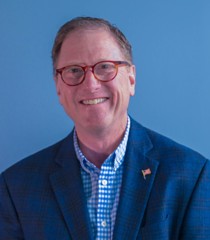 Randy Hubbell
President/CEO
Solaris Endovascular, Inc
https://www.solarisendovascular.com/
Contact
Randy Hubbell
(215) 688-
Follow
Randy Hubbell
https://www.linkedin.com/in/randyhubbell/
Solaris Endovascular
https://www.linkedin.com/company/solaris-
Interview conducted by:
Lynn Fosse, Senior Editor
CEOCFO Magazine
Published – February 2, 2026
CEOCFO: Mr. Hubbell, according to your website, “Solaris Endovascular advancing innovative vascular solutions.” Would you tell us what that means at Solaris and what you are working on now?
Mr. Hubbell: The endovascular space has a lot of unmet need as it relates to disease formation that is attributed to atherosclerotic disease, which forms in the peripheral arteries and needs to be repaired. There are still unmet needs there that are not being satisfied by the current technology.
The second area that is extremely important is dialysis access patients. These patients rely on the access to have dialysis three times a week and if the access is not working, they are at risk of death. The repairs of these failures associated with dialysis access are very problematic and need a significant upgrade. We have those solutions.
CEOCFO: Is there a connection between the two areas? How did you come to work in these two arenas?
Mr. Hubbell: There are strong connections because the disease process for dialysis access failure, and for peripheral artery disease, result in the same thing, which is a stricture in the vessels which prevents blood flow. That is what we fix, we open the vessel to allow for the blood flow. We have sustainability and durability that has not been seen before, meaning it will continue to stay open, where current solutions have a failure rate that is just too high.
CEOCFO: What is actually happening; how and where is the device used?
Mr. Hubbell: With dialysis access, a patient is going to have the artery and vein tied together. It is called arterial venous fistula. The objective is to create a circuit so that they can put a needle in the artery, take the blood out and pass it through an artificial kidney, and it pushes it back into venous side of that arteriovenous (AV) fistula. The patients get this done four hours at a time, three times a week. Those three sessions replace the kidney function for the entire week.
They have to use very high blood flow and that high blood flow damages the vessel walls. That damage causes neointimal hyperplasia, which you can think of as scar tissue. The scar tissue builds up and narrows the vessel size, it gets smaller because of the scar tissue build up. There needs to be some type of procedure that will then go in and treat that. The way to treat it is to open that vessel and find a way that the body doesn’t react to that procedure, and then close it back off again. It needs to be a sustainable treatment.
CEOCFO: Where are you in the development of that product?
Mr. Hubbell: We have a platform technology. We have two advanced products, one is commercial and the other is in phase II development. The first product that is commercial is being sold overseas. It is approved in 45 countries. We only focus on about 10 countries. We had about $4 million of sales in 2025, from that base platform. It is an endovascular covered stent. It is a nitinol stent covered with electro-
In the US, we will be bringing the next generation product. The next generation product is the transformational product, and we are the only one in the world who has it, where we take that mechanical device that is being described. We add a wonderful drug called sirolimus. It is a combination product, a mechanical and biologic solution to the problem I described of repairs not being durable and sustainable. What it does is open up the vessel and the sirolimus will be present for 90 days as the body needs it and will turn off the proliferative process so that you don’t have the neointimal hyperplasia or the scar tissue. It signals the vessel wall not to continue to proliferate.
It is an anti-
CEOCFO: Where did the idea germinate to develop this? Is the sirolimus the important part or are some of the other elements of the product?
Mr. Hubbell: It is a combination product and you need all elements for it to work well. You need a good base platform of a stent that is self-
What makes it special, is that it is going to have a dramatic impact on improving the treatment of these lesions, and be able to allow for the healthcare system to reduce cost from eliminating downstream cost and repeat procedures.
CEOCFO: Why is this one for the US?
Mr. Hubbell: The mechanical platform has been available for five or six years outside of the US. The data from the drug-
CEOCFO: What is the timetable?
Mr. Hubbell: This is what is called a PMA, which is a pre-
CEOCFO: Are people in the medical community aware of what you are doing?
Mr. Hubbell: We have certainly been in touch with and communicating with physicians that treat dialysis patients. They know the problem very well and it is a large unmet medical need. They are excited about the potential of this technology to help address and fix the problems they are currently dealing with, which is a low success rate associated with repairing dialysis access failures. Interventional Radiologists and Vascular Surgeons that are tuned in to dialysis access treatment repair, are starting to become aware and very excited about the technology.
CEOCFO: There seems to be a trend for dialysis treatment at home. How does that come into play when you are thinking about the product?
Mr. Hubbell: If they are having hemodialysis at home, it does not affect our products. The location of where they get hemodialysis is not relevant because they are still going to have the challenge of the failures associated with their access. Anybody on hemodialysis whether it is in a dialysis center or at home, still need to have their access maintained and treated so that it stays open and blood flows so that they can have their hemodialysis session.
CEOCFO: Are you seeking funding, investment or partnerships, as you continue along this path?
Mr. Hubbell: We are set up to raise capital from the venture capital market. We are seeking capital to continue to allow us to progress through the FDA clinical and regulatory process. Our most likely scenario, as we get close to approval then this would fit nicely in the portfolio of a large multinational.
CEOCFO: There are different diseases or conditions that seem to be more in favor with investors than others at different points in time. Where does what you are doing at Solaris stand in what the investment community is looking at now?
Mr. Hubbell: There is a lot of interest in AI; I am speaking of the med tech investors, institutional investors. AI is interesting, they have robotics which is also interesting. I would say after that is cardiovascular space which is what we participate in. It is probably the third most interesting area for investment.
CEOCFO: You personally have a long history in the industry. What have you learned over time that will make this particular concept easier to get through?
Mr. Hubbell: The one thing I have learned over the last 30 something years is everything starts with the clinical data. You have to have compelling clinical data that shows you are solving a problem, in that it is a meaningful differentiation from what the standard of care is. That is where you start. If you are going to go the route of using other people’s money for the purposes of progressing your development, then you need to be able to show those investors that there is a plan for an exit and that the exit makes sense from a timing perspective and from a valuation perspective.
When you are in my world of an early-
CEOCFO: What might readers miss about Solaris Endovascular which they should understand?
Mr. Hubbell: I think the thing they should understand is that we are creating a new category of an endovascular device. This is not an incremental or even a substantial improvement on what is out there today. This is transformational and this will create a new category. Whenever you are creating a new category, you are putting yourself in a new space and creating significant value for your investors.
Solaris Endovascular, Inc | Randy Hubbell | Solaris Endovascular – Developing a Safe, Groundbreaking Drug-